A check engine light has a way of showing up at the worst time. The car may still feel normal, or it may be running rough enough that you already know something is wrong. Either way, the light means the vehicle’s computer has noticed a problem that needs attention.
The cause can be simple or more involved. The important part is not guessing from the light alone. A proper inspection helps separate a small fix from a problem that can grow if the vehicle keeps being driven.
1. Loose Or Failing Gas Cap
A loose gas cap is one of the simplest reasons a check engine light can turn on. The fuel system is sealed, and the evaporative emissions system checks for leaks. If the cap is loose, cracked, missing, or no longer sealing well, the system can detect that leak and set a warning.
This is especially common after filling up. Tightening the cap may solve the issue, but the light may not turn off immediately. The vehicle usually needs a few drive cycles to confirm the system is sealing again. If the light stays on, the problem may lie elsewhere in the EVAP system.
2. Oxygen Sensor Problems
Oxygen sensors monitor exhaust gases and help the engine computer adjust the air-to-fuel ratio. When a sensor gets slow, dirty, or inaccurate, the engine may use more fuel than it should. The car may still drive normally at first, which makes the warning easy to ignore.
An oxygen sensor code does not always mean the sensor itself is the only issue. A vacuum leak, exhaust leak, misfire, or fuel control problem can affect sensor readings. Our technicians use the code as a starting point, then test the related systems before recommending a repair.
3. Worn Spark Plugs Or Ignition Coils
Spark plugs and ignition coils help the engine burn fuel correctly. When they wear out or fail, the engine can misfire. That may feel like shaking, hesitation, rough idle, weak acceleration, or a check engine light on the dashboard.
A flashing check engine light is more urgent because it can point to an active misfire. Unburned fuel can reach the catalytic converter and quickly damage it. If the light flashes, the safest move is to stop driving as soon as it is safe and schedule service before the repair becomes more expensive.
4. Catalytic Converter Trouble
The catalytic converter helps clean the exhaust before it leaves the vehicle. If it stops working properly or becomes restricted, the check engine light can come on. Drivers may also notice weak acceleration, poor fuel economy, rattling under the vehicle, or a sulfur-like smell from the exhaust.
A catalytic converter can fail on its own, but it is also damaged by problems upstream. Misfires, oil burning, rich fuel mixture, or ignored engine issues can shorten its life. Replacing the converter without correcting the cause can lead to the same problem returning.
5. Mass Airflow Sensor Issues
The mass airflow sensor measures the amount of air entering the engine. The computer uses that information to decide how much fuel to add. If the sensor is dirty or failing, the engine can run too rich or too lean.
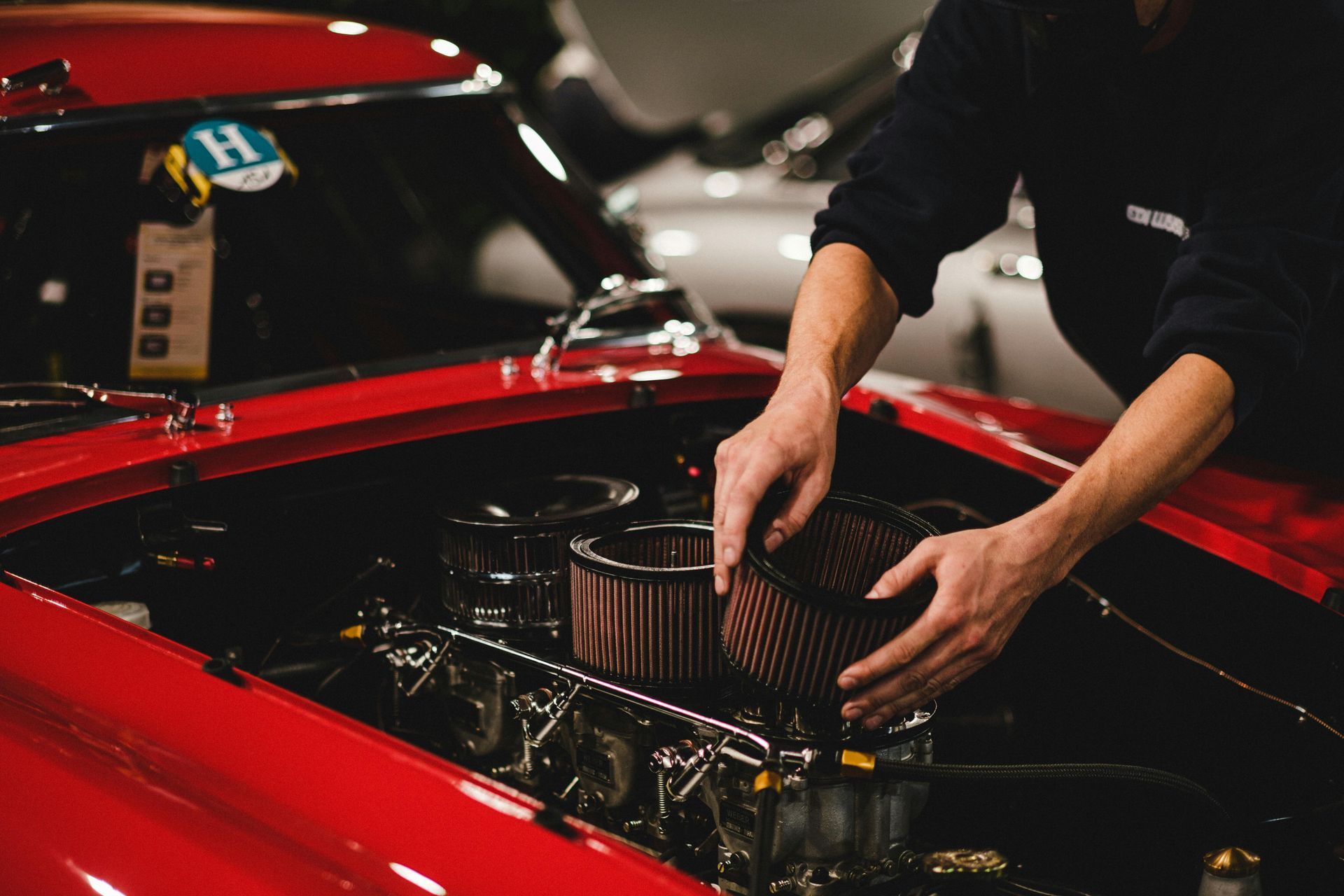
Symptoms can include rough idle, hesitation, poor fuel economy, hard starting, or stalling. A dirty air filter or intake leak can sometimes be involved, too. That is why regular maintenance matters. Keeping filters and intake parts in good shape helps the engine get accurate airflow readings.
6. EVAP System Leaks
The EVAP system controls fuel vapors instead of letting them escape into the air. Small leaks in hoses, valves, seals, or the charcoal canister can trigger the check engine light. These problems can be frustrating because the car may run perfectly fine.
EVAP leaks can be tiny, so they are not always visible. A smoke test or system test may be needed to find the source. We look for loose caps, cracked hoses, stuck purge valves, and other leak points before replacing parts.
7. Engine Or Fuel Mixture Problems
Some check engine lights indicate the engine is running too rich, too lean, or outside its normal range. Vacuum leaks, dirty injectors, fuel pressure problems, sensor faults, low compression, or intake issues can all affect how the engine burns fuel.
These problems may show up as rough running, lower mileage, fuel smell, hesitation, or a light that comes and goes. Even if the car still feels drivable, the issue should be checked. Fuel mixture problems can affect emissions, performance, and long-term engine health.
Get Check Engine Light Service In Dover, FL, With Absolute Auto Repair Inc
If your check engine light is on, flashing, or keeps coming back after being cleared, Absolute Auto Repair Inc in Dover, FL, can inspect the vehicle, read the codes, and test the related systems.